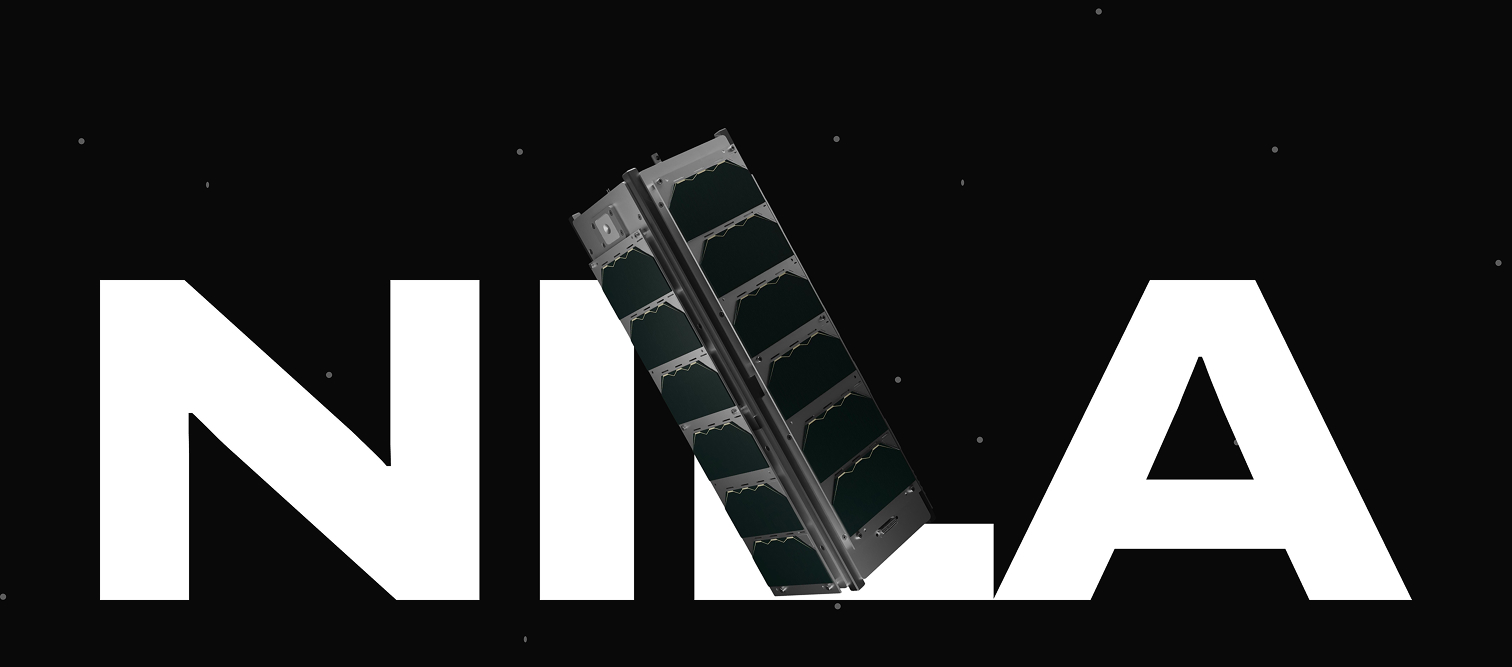
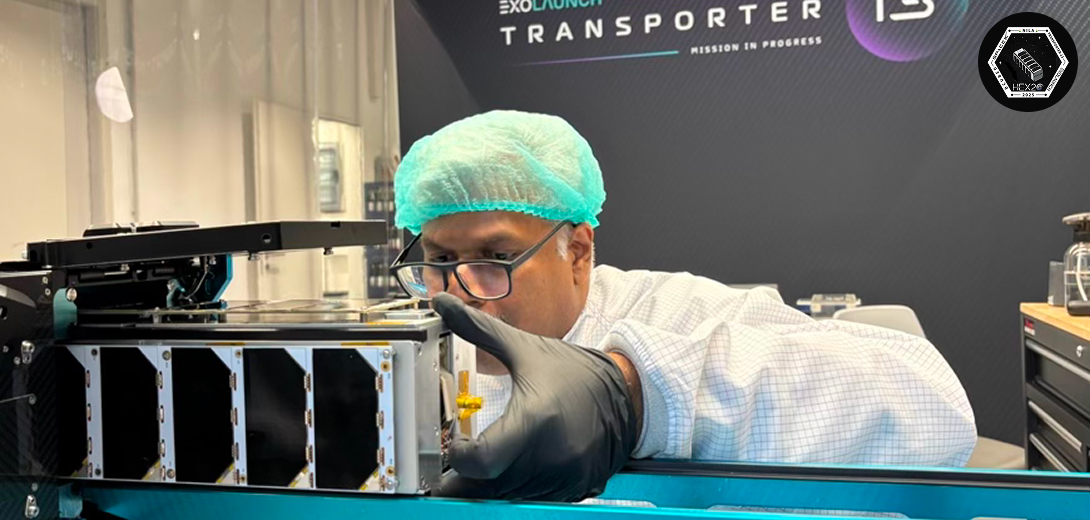
HEX20’s first mission NILA was a tech demonstrator mission designed to space qualify HEX20’s AX CubeSat platform and do an in orbit demonstration of DCube actuators. NILA launched onboard SpaceX’s Transporter-13 mission on March 14.
NILA was designed as a 3U spacecraft with body mounted panels and a passive magnet ADCS system (PMAC) for two axis stabilization and a slow rotation about the Earth’s magnetic field lines. NILA achieved partial mission success qualifying the spacecraft avionics, solar panels, the AX 3U structure etc. to TRL 9. While we received beacon signals at long irregular intervals, the available energy onboard was insufficient to sustain payload operations. NILA functioned for ~6 months before going completely silent.
The failure analysis traced the issue to a combination of power-system factors:
MPPT start up threshold: The power system requires a minimum of 10 V at the MPPT input to begin battery charging. Under unfavourable post- deployment conditions, available solar power was not always sufficient to consistently exceed this threshold. The PMAC system provided an adequate orientation of the spacecraft for the 7 solar cell in series solar panels to achieve sufficient illumination angles to hit 10V only between +30 to -30 degrees in latitude. This resulted in a very limited window for battery charging.
Leakage Current Impact: Although seemingly small, a measured leakage current of approximately 1.6 mA continuously drained stored energy during the pre-commissioning phase. This gradual loss significantly reduced the battery state of charge before the spacecraft could achieve stable power- positive operation. The spacecraft launched with an almost depleted battery
Antenna Deployment: The conops had autonomous antenna deployment after a timeout period after spacecraft deployment which was to be turned off by a ground command during operations, the spacecraft remained in a loop of charging and discharging given the small window of charging available. The ground operations was unable to turn off antenna deployment. An important lesson learned was to hold off any autonomous deployment till the spacecraft battery was above a threshold charge level and to implement a feedback mechanism for the deployment which would stop the autonomous deployment.
CoM Power Requirement: The communications and processing chain requires the battery bus voltage to remain above operational limits. As battery energy decreased, the available power was sufficient only for intermittent low powered beacon transmissions, preventing sustained operation of higher-power subsystems and the mission payload.
As a result, the spacecraft remained capable of transmitting occasional periodic health beacons, demonstrating successful spacecraft deployment and basic platform functionality. However, the available power margin was insufficient to fully activate and operate the payload, limiting overall mission objectives.
This mission reinforced an important engineering lesson: in power-constrained spacecraft, small leakage currents and startup thresholds can have mission-level consequences. Future designs will place greater emphasis on leakage-current budgeting, low-power operating modes, implementing deployment feedback mechanisms, conops prioritizing mission safety and startup energy margin analysis to improve resilience and mission success probability.
A summary of the beacons received and decoded from satnogs by the amateur community is available here.